Why Successful Women Are Choosing Private Matchmaking
Dating-app fatigue is leading successful women toward discreet, curated matchmaking. Discover why privacy, compatibility, and time now matter more than endless choice.

Why Successful Women Are Leaving Dating Apps for Private Matchmaking
For accomplished women, modern dating is no longer a question of access. It is a question of relevance, discretion, and time.
Dating apps were once presented as the most efficient way to meet someone. They expanded the dating pool, removed geographical boundaries, and made introductions available at any hour. But for many successful women, more access has not produced better relationships. A 2024 survey found that 78% of Americans who had used a dating app in the past year felt fatigued, with women reporting burnout at 80% versus 74% for men.
Instead, the experience increasingly feels like another demanding digital platform to manage: profiles to evaluate, conversations to maintain, intentions to decipher, and disappointing encounters to recover from. What was supposed to make dating simpler can become a second job — one with very little quality control.
This is helping to drive a renewed interest in private matchmaking.
Not because accomplished women are unable to meet people, but because they are becoming more deliberate about how they meet them.
The problem is not a lack of options
A woman who has built a successful company, established an international career, or developed a full and independent life is unlikely to suffer from a shortage of social contact.
She may attend conferences, private dinners, industry events, cultural openings, and destination weddings. Her professional network may extend across several countries. She may receive plenty of attention online and offline.
Yet attention and compatibility are not the same thing.
A large network does not necessarily provide access to someone who is emotionally available, intellectually compatible, relationship-ready, and comfortable with an ambitious partner. In some cases, visibility creates additional complications. Public-facing professionals, founders, investors, and executives may be uncertain whether someone is interested in them as a person or attracted to their reputation, connections, or lifestyle.
For these women, dating is not primarily an acquisition problem. It is a filtering problem.
Dating apps optimise for activity, not compatibility
Most digital dating products are designed to keep people interacting with the platform. The user is repeatedly presented with new profiles, new possibilities, and new reasons to continue browsing. The practical consequences of that design are set out in this comparison of elite matchmaking and dating apps.
That model can encourage a paradoxical mindset: even when someone promising appears, there is always another profile one swipe away.
People begin making rapid decisions based on photographs, job titles, height, age, or a few carefully selected sentences. Nuance disappears. Human beings become collections of searchable attributes.
This environment can be particularly frustrating for people seeking a serious partnership. A polished profile does not reveal whether someone communicates well during conflict. A prestigious position does not indicate emotional generosity. Shared interests do not guarantee aligned values. Declaring an interest in commitment does not always mean a person is genuinely prepared for it.
The information that matters most often emerges only through context, conversation, and trusted human judgment.

Time has become the true luxury
For many high-performing women, money is not the principal constraint. Time and attention are.
They already delegate important areas of their lives to experienced professionals. They work with lawyers, financial advisers, executive coaches, recruiters, personal trainers, and medical specialists. They do so not because they are incapable, but because expert guidance improves decisions and protects valuable time.
Private matchmaking applies the same logic to relationships. Rather than spending evenings reviewing hundreds of profiles, a client can meet a smaller number of carefully considered people. The purpose is not to manufacture instant chemistry or guarantee a particular outcome. No credible service can promise love.
The value lies in reducing noise and creating introductions with genuine potential. A 2024 Statista survey found that U.S. Millennials spent an average of 55.7 minutes per day on dating apps, while Generation X and Gen Z each spent nearly 50 minutes. For an accomplished person, avoiding months of misaligned conversations and unsuitable dates can matter far more than maximising the number of matches.
Privacy is becoming increasingly important
Public dating profiles require people to disclose personal information to a large and largely unknown audience.
For someone working in technology, finance, law, media, entrepreneurship, or another visible field, that exposure may be undesirable. Colleagues, employees, clients, competitors, and journalists may use the same platforms.
Screenshots can travel. Personal details can be copied. A profile intended for dating can become part of someone’s professional identity without their consent.
Private matchmaking offers a different environment. Introductions take place selectively rather than publicly. Personal information is shared with purpose. The process can be conducted away from the performative culture of swiping, posting, and collecting matches. The protections behind that environment — mutual NDAs, small vetted teams, no public profile — are described in how elite matchmakers handle confidentiality breaches.
Discretion is not secrecy. It is control over who receives access to your private life.

Successful women are seeking equals, not résumés
It is tempting to define compatibility through visible markers: education, income, profession, social background, or lifestyle.
These factors may matter. But they rarely determine whether a relationship can thrive.
A genuinely compatible partner must be able to engage with a successful woman without competing with her achievements, being intimidated by her independence, or expecting her to diminish herself for the relationship.
He needs a secure identity of his own.
That does not always mean holding the same title, earning the same income, or following the same career path. Equality in a relationship is more complex than symmetry on paper. It may appear as intellectual curiosity, emotional steadiness, personal ambition, integrity, generosity, adaptability, and the ability to support another person’s growth.
Private matchmaking is most effective when it looks beyond credentials and considers the human being behind them.
A curated introduction changes the context
On an app, two strangers often meet with limited information and uncertain intentions. Each person must determine whether the other is single, sincere, emotionally available, and interested in the same kind of relationship.
A curated introduction begins from a stronger foundation.
Both people understand why the introduction is being made. There is a degree of context and accountability. Essential questions may have been addressed before the first meeting rather than weeks into an ambiguous exchange.
This does not remove the unpredictability of attraction. Nor should it. Chemistry remains personal. Relationships still require courage, timing, openness, and mutual effort. The purpose of matchmaking is not to eliminate uncertainty, but to make that uncertainty more worthwhile.
The most valuable part may be the human perspective
A thoughtful matchmaker does more than identify potential partners.
The process can reveal patterns that are difficult to recognise alone. A client may repeatedly choose charismatic but unavailable people. She may confuse familiarity with compatibility. She may maintain a rigid list of preferences that excludes people capable of offering the relationship she actually wants.
Professional guidance introduces an informed external perspective. That perspective should not pressure a client to abandon her standards. It should help distinguish between meaningful standards and protective habits.
There is an important difference between being selective and being closed.
The right process respects a woman’s judgment while also encouraging honest reflection: Which qualities truly predict a fulfilling partnership? Which preferences are flexible? What dynamics have shaped previous relationships? What kind of life should a future partner be able to build alongside her?
These questions cannot be answered by an algorithm alone.
Matchmaking is not an act of desperation
The old perception of matchmaking suggested that a person sought professional help only after every other option had failed.
That interpretation no longer reflects how many successful people approach the service.
For them, private matchmaking is a deliberate decision to pursue an important area of life with greater intention. It is not a rejection of independence. It is an acknowledgment that independence and partnership can coexist.
A woman can have a meaningful career, strong friendships, financial security, and a deeply satisfying life — and still want someone with whom to share it.
She does not need to be rescued, completed, or validated.
She wants to meet a person who adds depth to an already substantial life.
A quieter, more intentional future for dating
The next chapter of modern dating may not involve more technology, more profiles, or more choice.
It may involve fewer introductions made with greater care.
For discerning women, the appeal of private matchmaking is not simply exclusivity. It is the opportunity to step outside an exhausting digital marketplace and return to something more human: context, trust, judgment, and personal connection.
The goal is not to meet everyone. It is to meet someone worth knowing.
Frequently Asked Questions
Why are successful women leaving dating apps for private matchmaking?
They are trading volume for relevance. Dating apps reward activity and offer endless profiles, while private matchmaking filters for compatibility, discretion, and relationship readiness before any introduction happens.
Is private matchmaking better than dating apps for busy professionals?
For time-poor professionals seeking serious partnerships, private matchmaking typically converts better because a human matchmaker pre-screens for values, lifestyle, and goals before arranging a curated introduction.
How does private matchmaking protect privacy?
There is no public profile. Information is shared selectively and with purpose, and introductions are handled one-to-one through a vetted matchmaker rather than broadcast to a mass audience.
What kind of partner can a successful woman meet through matchmaking?
Someone who is not only accomplished but also emotionally available, relationally secure, and genuinely compatible — a person who can engage with her ambition without being intimidated by it.
Is matchmaking only for people who struggle to meet others on their own?
No. Many successful women have large networks. Matchmaking is a deliberate decision to approach an important area of life with the same intention and professional judgment they apply everywhere else.
About Velin Privé
Velin Privé is a private, curated matchmaking network for exceptional people in technology and business. Every prospective member is reviewed individually and matched by a person, not an algorithm, using a structured deep interview and an ~80% success rate measured by couples who continue dating for at least three months after introduction.
Ready to approach your personal life with the same intention you bring to everything else? Apply to join the Velin Privé private network.
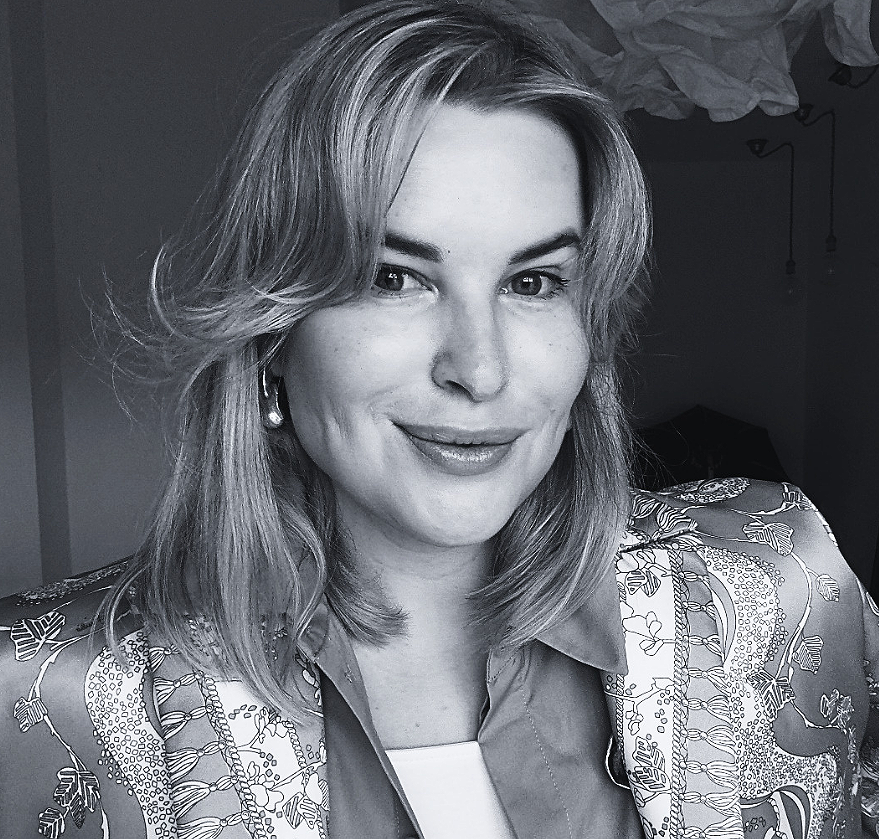
Marina Pasqual
Co-Founder at Velin Privé