AI and Dating in 2026: What the Evidence Really Shows
AI is changing how people find, vet and talk to dates. A 2026 evidence review of where it helps, where it breaks, and six questions to test any AI dating tool.

AI and Dating: What the Evidence Shows in 2026, and Where a Human Check Still Matters
*By Marina Pasqual, Velin Privé Co-Founder · October 15, 2026 · 19 min read*
AI and dating pulled in two directions this spring. In mid-May 2026, ABC7 reported that Bumble would retire the swipe in favor of an AI assistant, and on June 18 Match Group published a survey showing that 47% of U.S. singles aged 18 to 39 view AI negatively in romantic contexts.
That gap is the state of AI and dating in 2026. The apps are betting on the technology while the singles they court stay wary, and most of the numbers behind the headlines come from companies with something to sell. This article goes through the evidence one stage of the search at a time, says who counted each number and why, and ends with six questions you can use on any AI dating tool.
How we checked the numbers. On October 15, 2026 we opened each cited page and compared it with the figure in the text. Surveys run by companies are labeled as such. Where a page would not open or a figure could not be traced, we left it out. Exceptions you should know about: the original Match Group and Kinsey Institute release for Singles in America would not open (404), so that figure rests on Scientific American and Psychology Today; the PNAS and Scientific Reports papers themselves were not opened, only the Stanford and Cornell pages describing them; the 2012 and 2017 studies are cited through the Association for Psychological Science's press releases; and the EU amendment and California's SB 243 are cited through law-firm summaries, not the legal texts.
What counts as AI in dating
AI in dating is five different products with five different risks: assistants that write your messages, tools that coach your profile, systems that pick your matches, filters that catch fake accounts, and companions that stand in for a partner.
Most statistics ignore this. "Uses AI in dating" could mean someone who asked a chatbot to polish a bio or someone who talks to a companion app every evening. The risks, the evidence and the rules differ for each.
Some terms first. Online dating means finding partners through internet services; a dating app is the mobile version. Artificial intelligence is the broad field. Generative AI is the technology behind chatbots such as ChatGPT, which produce text and images. A chatbot is software you converse with; a large language model is the kind of system that powers many of them.
| Category | Examples (with source) | What it promises | Main risk | State of the evidence |
|---|---|---|---|---|
| Assistants (wingmen) | Rizz, Winggg and YourMove AI suggest replies to screenshots of incoming messages (Scientific American) | Better replies, faster | Suspicion of AI lowers trust (see Converse below) | Described; no study of whether it earns more dates |
| Profile coaches | Hinge's Prompt Feedback | Tips on your profile answers without writing them | Evidence comes from the company's own data | Company data only |
| AI matching | Tinder's Chemistry (Match Group, Nov. 2025); Bumble's Bee (ABC7, May 2026) | Fewer, better-fitting profiles | Opacity, data access | No published outcome metrics found |
| Safety filters | Bumble's Deception Detector | Blocks fake and scam accounts | The headline number comes from the company's own test | Self-reported |
| Companions | Chatbots designed as a friend or partner; regulated in California by SB 243 | A relationship without a person | Dependence, data, disclosure | Minority behavior (Pew, Match Group; see Companions) |
How many people use it, and whose numbers to trust
Attitudes are more wary than the headlines suggest: in Match Group's 2026 survey, 47% of singles aged 18 to 39 viewed AI in romantic contexts negatively, and for deeper personal advice only 20% turned to AI, against 60% who turned to friends and 60% to family.
Start with the number most often repeated. Scientific American, reporting on the Match Group and Kinsey Institute Singles in America survey, wrote that 26% of U.S. singles said they use AI to enhance dating, a 333% jump from the year before. A Psychology Today post on the same study describes the sample as 5,001 singles aged 18 to 98, funded by Match and run with the Kinsey Institute, and words the 26% differently: as respondents who felt AI is making online dating easier. Neither piece prints the baseline behind the 333%, so the increase cannot be checked. Treat 26% as a company-commissioned figure with an unclear definition, and treat 333% as unverifiable.
The 2026 survey is cleaner. Match Group's own research team polled about 1,000 U.S. singles aged 18 to 39 between April 13 and May 8, 2026. It found that nearly half (47%) view AI in romantic contexts negatively and nearly two-thirds (64%) can see AI helping their dating journey. Note the wording: 64% "can see AI helping," which is weaker than saying they want it. The tasks singles named were keeping a conversation going (27%), building a stronger profile (27%), starting a conversation (26%) and planning a date (24%). The release sums it up in one line: "AI is a tool for tasks. People are for feelings."
A third number measures belief, not behavior. In Norton's 2025 survey of 1,001 U.S. adults, run by Dynata for Gen in December 2024, 60% of current online daters said they believed they had received a message on a dating app that was written by AI. They did not know it; they believed it. Norton sells security software, which is worth keeping in mind when it reports that 55% of online daters meet suspicious profiles at least weekly.
| Source | Who ran it | Sample and field dates | Whose interest | How to cite it |
|---|---|---|---|---|
| Singles in America 2025 (via Scientific American, Psychology Today) | Match Group with the Kinsey Institute (per Psychology Today: funded by Match) | 5,001 U.S. singles aged 18-98 (per Psychology Today) | Owner of dating apps | "Match reported 26%"; 333% has no published baseline |
| Match Group Research, June 2026 | Match Group | About 1,000 U.S. singles aged 18-39; April 13 to May 8, 2026 | Owner of dating apps | 47% negative and 64% "can see AI helping," with context |
| Norton Cyber Safety Insights, 2025 | Gen (security software) through Dynata | 1,001 U.S. adults; December 5-16, 2024 | Sells protection | 60% is a belief; 46% is a tested result |
| Pew Research Center, 2026 | Pew | 5,119 U.S. adults; February 17-23, 2026 (Pew report) | Independent | Shares by age group (see Companions) |
| PNAS 2023; Scientific Reports 2023 | University researchers | 4,600 participants; 219 and 299 pairs | Peer-reviewed | Mechanism, not market share |
| FTC | U.S. government | Consumer reports | Public interest | Losses reported to the FTC only |
The sources agree on one thing: people use AI as a tool for specific tasks and do not hand it the relationship.
A dating funnel: where AI helps and where it stops
Finding a partner works like a funnel: define who you want, reach candidates, qualify them, talk, and decide. In the evidence reviewed here, AI looks most promising at the top of that funnel, though unproven, and weakest at the bottom.
The funnel is borrowed from marketing, where a purchase funnel describes how a large pool of interest narrows to a few decisions. It fits partner search because the arithmetic is the same: you need to sift many possible candidates, and a busy person has little time to do it. The same idea runs through executive search; how executive dating services run a search shows it applied to candidates.
Author's note (Marina Pasqual). In marketing you never judge a funnel by its top. A big number of names at the top tells you nothing about who comes out at the bottom, and most of the work is in deciding who deserves to stay in. Dating is the same, and technology is much better at making the top bigger than at deciding who belongs in it.
| Stage | The reader's question | What AI does (example) | Evidence | Author's verdict |
|---|---|---|---|---|
| 1 Define | Who am I looking for? | Asks questions and gives feedback (Hinge, Bee, Chemistry) | Feature descriptions; no outcome data | Most promising (unproven) |
| 2 Reach | Where do I find more of the right people? | Shows fewer profiles a day (Chemistry); replaces the swipe (Bee) | Payers fell at some apps; no causal link shown | Medium |
| 3 Qualify | Is this person real? | Filters fake accounts (Bumble); also generates fakes | 4,600 people could not tell AI text; 46% passed a photo test | Mixed |
| 4 Converse | How do I talk to them? | Suggests replies | Suspicion of AI lowered ratings in one experiment | Medium, with a side effect |
| 5 Decide | Will we click? | "Smart" matching | No prediction of unique pairs in the studies reviewed | Weak |
The verdict column is our reading of the cited sources, not a measurement. Nobody has published conversion data for the dating funnel, and we do not claim one.
1. Define: what do you actually want
AI is most useful where it makes people say what they want: Hinge's Prompt Feedback offers tips without writing the answer, and both Bumble's Bee and Tinder's Chemistry start with questions.
Hinge announced Prompt Feedback in January 2025. It reviews a user's answers to profile prompts and gives feedback, and the company states that the feature does not tell the dater exactly what to say. Hinge's own 2024 data, which we cannot check independently, found that likes on text prompts were 47% more likely to lead to a date than likes on photos.
Tinder's Chemistry works differently. According to Match Group's November 2025 earnings materials, it gets to know a user through interactive questions and, only with permission, learns from the camera roll. At the time it was live in New Zealand and Australia, with plans to add countries. The same document calls it "a major pillar of Tinder's upcoming 2026 product experience." Nothing in it reports whether Chemistry produces better matches.
Bumble's Bee follows the same pattern. ABC7 reported in mid-May 2026 that Bumble is removing the swipe and introducing the assistant, and dropping the rule that women message first. The Conversation reports that Bumble will introduce Bee at some point later this year, and that Bee will first chat with users to get to know them, then suggest matches and date ideas.
The best use of these tools is the same in all three, and it is an old one: before you look for someone, you have to describe the person. That is where executive search starts, the discipline of finding one specific person for a senior role, and where good marketing starts. None of the three has published evidence that it improves matches, and this article does not claim it.
2. Reach: more candidates is not the same as more fit
AI lowers the cost of reaching people, but it does not create more of the right ones: Tinder's Chemistry surfaces a few highly relevant profiles a day, while Tinder's paying users fell 7% year over year in the third quarter of 2025.
Match Group describes Chemistry as a response to swipe fatigue, showing a few highly relevant profiles each day instead of an endless stream. In the same release, Tinder payers declined 7% year over year to 9.3 million in Q3 2025, while Hinge payers rose 17% to 1.9 million. The wider market tells a similar story: Match Group's total payers fell 5% to 14.5 million in Q3 2025, and Bumble Inc.'s Total Paying Users, a figure that adds the Bumble app to Badoo and other apps, fell 20.5% to 3.3 million in Q4 2025. These are different quarters and different companies, and none of them shows that AI caused or will fix the decline. They show why apps are betting on it.
Two further points. How Bee works is not public, according to the Deakin sociologist writing in The Conversation, so any claim about its fairness or accuracy is premature. And personalization has a price in data: Chemistry's camera-roll analysis is opt-in, but it shows what the next generation of matching wants from you. What dating apps collect about you covers the basics; the AI-specific change is that the data is no longer only what you typed, but what you photographed.
3. Qualify: is this person real?
Verification is where AI helps and hurts at once: in six experiments with 4,600 participants, people could not reliably detect AI-generated self-descriptions, while Bumble says its detector blocked 95% of the spam and scam accounts it flagged in its own testing.
Start with the human side. A 2023 PNAS study found that human judgments of AI-generated language are hindered by intuitive but flawed heuristics. Its six experiments involved 4,600 participants and covered professional, hospitality and dating contexts. In plain terms, the shortcuts people use to decide whether text sounds human are not reliable. The classic benchmark is the Turing test; in a 2025 preprint described by Scientific American, human judges chatting with both GPT-4.5 and a person mistook the AI for the human 73% of the time.
Images are no easier. In Norton's survey, fewer than half (46%) of respondents correctly identified a fake image when tested, and 27% of online daters reported seeing their own photos in a profile that was not theirs. That is the raw material of catfishing, which uses an entirely fake identity, and of the romance scams that follow.
The money trail is documented. In a May 2026 consumer alert, the FTC said romance scam losses reported to it rose 22%, an average of $2,020 per person, and that romance scammers play the long game, building a relationship over time before the conversation turns to money. FTC figures count only what victims report, so they likely understate the problem.
Platforms are responding with the same technology. Bumble's Deception Detector uses an AI model to identify fake, spam and scam profiles; the company says it was supported in blocking 95% of those accounts automatically, in its own testing, with human moderators behind it. The page gives no date and no independent audit. It is a useful claim and an unverified one.
The practical conclusion: do not try to detect AI. Verify the person. A live video call and a first meeting in a public place are checks that do not depend on guessing, and the FTC's advice is simple: do not send money to someone you have never met in person. The EU now also requires some AI content to be labeled, covered under the rules.
4. Converse: the suspicion penalty
AI-assisted messaging works until someone suspects it: in a Cornell experiment with 219 pairs, people who suspected their partner of using AI-suggested replies rated that partner as less cooperative, whether or not the partner actually used them.
Chatfishing is the use of AI to help chat with prospective partners and secure dates, as opposed to inventing a whole identity. Scientific American notes that no studies exist showing whether chatfishers get more dates, while many users report matches who are engaging online and dull in person.
What we do have is a Cornell study published in Scientific Reports in April 2023. In the first experiment, with 219 pairs discussing a policy issue, smart replies increased communication efficiency, brought more positive emotional language and earned positive evaluations by communication partners. But participants who thought their partner was using more suggested replies saw that partner as less cooperative and felt less affiliation toward them, whether or not the partner actually used AI. Lead author Jess Hohenstein linked this to a wider suspicion of AI. A second experiment, with 299 pairs, found that conversations with positive or default Google smart replies had a more positive emotional tone than those with negative or no smart replies. In this evidence the penalty for suspicion sat alongside the benefit of assistance, and the study does not say which is larger.
Scientific American's article offers one piece of advice for sounding human: be "gloriously embodied." Say what you did and how it felt, not that you like music. Specific, physical detail is hard for a model to invent on your behalf and easy for you to supply.
Our reading of this evidence, which is judgment and not a finding: AI that helps you clarify what you think is easier to defend than AI that replaces your voice.
5. Decide: can data predict who will click?
Relationship scientists have found no solid evidence that profile data predicts who will click with whom: a 2017 machine-learning study of speed daters could not predict pair-specific attraction from more than 100 measures taken before they met.
The studies are older than today's language models, so treat them as evidence about matching methods of their time. In 2012, a review in Psychological Science in the Public Interest by Eli Finkel and four colleagues concluded that there was "no compelling evidence that any online dating matching algorithm actually works." Their reasoning: the strongest predictors of a relationship's success, such as how two people interact and handle stress, cannot be measured before they meet.
The 2017 study by Samantha Joel, Paul Eastwick and Eli Finkel put this to a modern test. Speed daters filled in questionnaires on more than 100 traits and preferences, then went on four-minute dates. A machine-learning algorithm could predict who tended to be liked and who tended to like others in general. It could not predict which specific pairs would click. "I didn't expect we would find zero," Joel said.
Bias is a separate problem. Writing in The Conversation, a Deakin University sociologist warns that AI introduces potential for bias in how users are assessed and matched, including the reinforcement of gender roles and the repetition of racial biases already documented in online dating. That piece covers the topic in more depth.
Taken together, the closer you get to a decision, the more a meeting and a person's judgment matter. For our view of that from the agency side, see why human judgment still carries the final step in matchmaking.
AI companions are a different product
AI companions are a separate and still minority behavior: Pew found that 7% of U.S. adults aged 18 to 29 say they ever use AI chatbots for companionship, and two in five singles aged 18 to 39 in Match Group's survey say they would refuse to date someone who uses a companion app.
Pew Research Center surveyed 5,119 U.S. adults from February 17 to 23, 2026, as its report states. Among adults aged 18 to 29, 20% say they ever use AI chatbots for emotional support or advice and 7% for companionship. Among those aged 30 to 49 the figures are 13% and 6%, and among those 65 and older, 2% and 1%. Emotional support and advice are more common than companionship in every age group.
Match Group's 2026 survey adds the dating angle. Two in five singles aged 18 to 39 said they would refuse to date someone who uses an AI companion app, rising to 51% among women aged 18 to 24. Among the 12% of 18-to-24-year-olds who had tried a companion app in the past three months, the reasons were boredom and entertainment (45%), role-play and simulation (43%), building genuine connection (38%) and processing emotions (26%). This is a company survey and a small subgroup, so read it as a signal about attitudes, not a measure of the market.
Companions are also a category California now regulates directly, through SB 243, covered in the next section.
The rules are catching up
Two sets of rules now touch AI and dating: the EU AI Act's Article 50, which requires disclosure that you are talking to AI and labeling of AI-generated content from 2 August 2026, and California's SB 243, which sets safeguards for companion chatbots.
| Rule | What it requires | Who it applies to | From when | Source |
|---|---|---|---|---|
| EU AI Act, Article 50(1) | Tell people they are interacting with an AI system, unless that is obvious | Providers of systems built to interact directly with people | 2 August 2026 | Article 50 |
| EU AI Act, Article 50(2) | Mark synthetic audio, image, video and text outputs in a machine-readable format | Providers of generative systems | 2 August 2026; until 2 December 2026 for generative systems already on the market | Article 50; Goodwin |
| EU AI Act, Article 50(4) | Disclose that deepfake content was artificially generated or manipulated, with exceptions | Deployers of systems that create deepfakes | 2 August 2026 | Article 50 |
| California SB 243 | Clear notice that the chatbot is not human when a reasonable person could be misled; notices at least every three hours for known minors; a private right of action with damages of at least $1,000 per violation | Operators of companion chatbots | Signed October 13, 2025; some duties phased in through July 1, 2027, when annual reporting begins | Skadden |
In dating terms, a chatbot assistant inside an app that could be taken for a person must say it is AI, and deployers of systems that create deepfakes must disclose them, with exceptions. The AI Act's Article 50 applies from 2 August 2026, according to Article 113. A later amendment, Regulation (EU) 2026/1744, which Goodwin reports came into force on 27 July 2026, gave providers of generative systems already on the market until 2 December 2026 to meet the marking obligation. We relied on the law firm's account of that amendment, not the regulation's text.
None of this says that any particular app breaks a law, and it is not legal advice. It does give you a standard to hold a product to: does it tell you when you are talking to a machine?
Where human judgment still carries the weight
The pattern in the evidence is that AI lowers the cost of finding people and raises the cost of trusting them, which is why the last steps before an introduction are still worth giving to a person.
Full disclosure: the author co-founded Velin Privé, a private matchmaking agency for founders, executives and investors in tech and business, and developed its method, Velin Privé Target Search. Velin Privé Target Search is executive search for your personal life, built on marketing expertise. We use the same tools that businesses use to find a specific customer, and apply them to finding one specific person: a precise portrait of who you are looking for, targeted outreach to the people who match it, first in our own database, then far beyond it. Every candidate is personally vetted before an introduction.
We use technology for the search; every introduction and every vetting is done by people. In practice, the introduction protocol says that an introduction happens only after two independent yes answers, that members do not browse people, and that everyone, candidates included, goes through pre-screening and a personal interview. On searching a database versus searching actively, see database versus active search; for the contrast with swiping, a direct comparison with dating apps.
Author's note (Marina Pasqual). The step where I trust AI least is the last one: deciding that two particular people should meet. A model can tell you what a person wrote about themselves. It cannot tell you how that person will sound across a table, or whether the other person will want to hear it. That is a judgment, and I want a person to own it.
Author's note (Marina Pasqual). Where AI helps is in sharpening the question. It is good at prompting you to be specific about what you want, and being specific is where every good search starts.
There is a limit worth stating: a method is not a promise of an outcome.
Six questions to test any AI dating tool
Any AI dating feature can be judged with six questions: does it say it is AI, what data does it need, who verifies profiles, does it write for you or help you decide, what evidence of outcomes exists, and who is accountable for an introduction.
| # | Question | Why it matters |
|---|---|---|
| 1 | Does it tell you it is AI? | EU Article 50 and California SB 243 now set disclosure rules for chatbots, so a silent bot is a warning sign. |
| 2 | What does it need from you, and can you say no? | Chemistry's camera-roll analysis is described as permission-based; a tool that takes data without a clear choice is a different product. |
| 3 | Who verifies profiles, and what does the vendor's own number measure? | Bumble's 95% comes from its own test; Norton's survey figures come from a company that sells protection. |
| 4 | Does it write for you or help you decide? | Hinge says its feature does not supply language, and the Cornell experiment found that suspected AI use lowered a partner's ratings. |
| 5 | Does it claim to predict compatibility, and what is the evidence? | The 2012 review and the 2017 speed-dating study found no solid prediction of which pairs click, and the Chemistry materials report no outcome metrics. |
| 6 | Who is accountable for each introduction? | An algorithm cannot answer for a bad introduction. A named person can. |
A rule of thumb from the author, not a finding: if a tool cannot answer three of the six, treat its claims as marketing.
What to watch through early 2027
Four dates matter: Bumble's Bee, which The Conversation reports is due later this year; the expansion of Tinder's Chemistry beyond New Zealand and Australia; the EU's 2 December 2026 marking deadline for generative systems already on the market; and the start of SB 243 reporting on 1 July 2027.
You will know the evidence has changed when a company publishes outcome metrics for its AI matching, or when an independent audit tests the figures described above. Until then, assume the numbers come from the vendor.
What the evidence leaves open
AI makes the search wider and cheaper, and it leaves trust as expensive as it was. The six questions above are the practical summary.
If you would rather have a person do the vetting, here is how we run it.
Sources
About the author
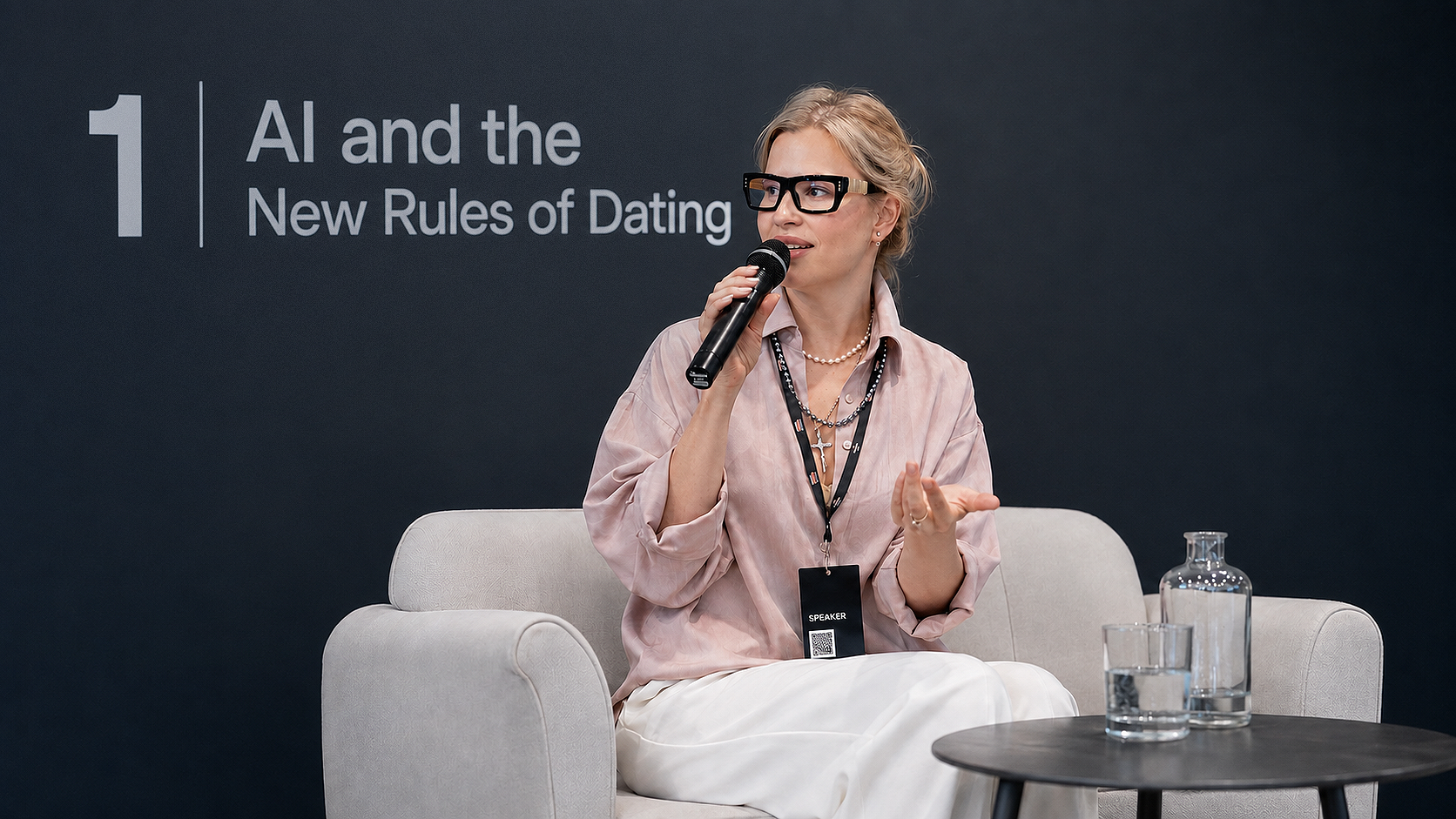
Marina Pasqual is the co-founder of Velin Privé. Velin Privé is a private matchmaking agency for founders, executives and investors in tech and business. We work internationally. Marina developed Velin Privé Target Search, executive search for your personal life, built on marketing expertise. We use the same tools that businesses use to find a specific customer, and apply them to finding one specific person: a precise portrait of who you are looking for, targeted outreach to the people who match it, first in our own database, then far beyond it. Every candidate is personally vetted before an introduction. Marina is also co-founder of LadiesConnect Women's Community and an Applied AI Researcher & Speaker. Based in Barcelona, Spain.
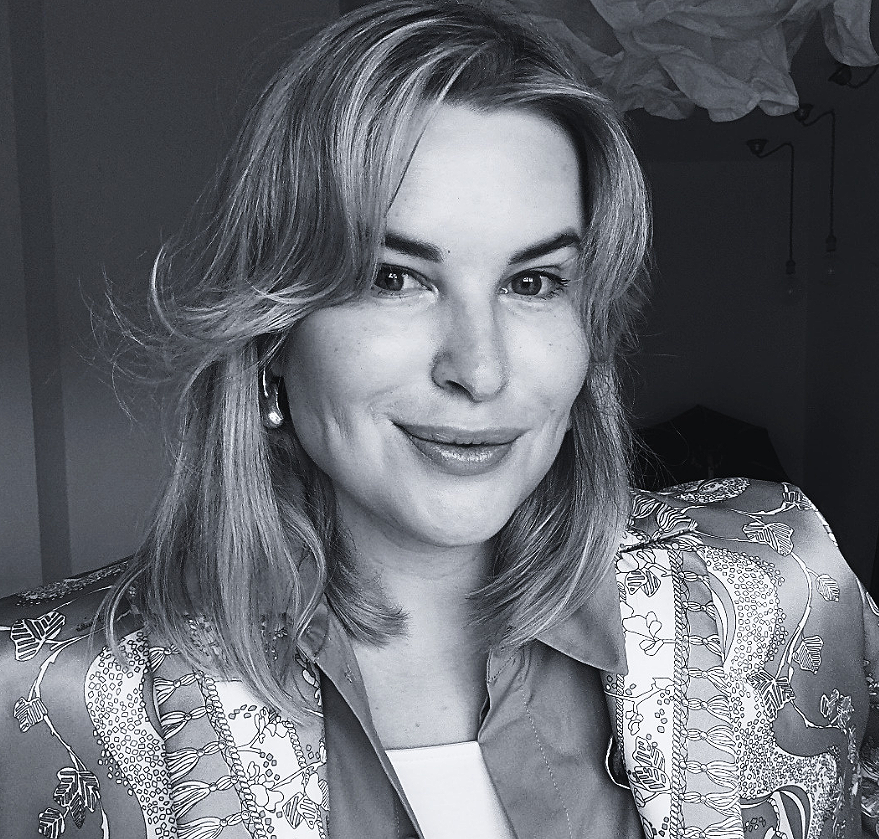
Marina Pasqual
Co-Founder at Velin Privé